
Don't Stop Overthinking
A few months ago, around dinner time, I was sitting on an old sofa in the campus hallway, completely convinced that my life was over.
The hallway was mostly empty. Outside, the evening air in Kandy was cooling down, and the dim fluorescent lights of the corridor hummed softly overhead. On the surface, nothing had changed. I was just a student sitting on a worn cushion, scrolling through a screen.
Inside my head, a bomb had gone off.
It started with a message from someone holding a deeply private, embarrassing mistake over my head. Their whole goal was to watch me break. They wanted to create chaos, threatening to expose it to my parents, to my lecturers, and to the people I saw every day. That was the trap: they wanted me to panic. By spiraling, I was doing their job for them, making their expectation come true.
My brain immediately went to work. It did not take a pause. It built a massive, terrifying story about my future, and it did it in seconds.
I saw my mother collapsing in tears. I saw myself getting kicked out of my degree. I saw the shame of facing everyone I knew. I saw myself ten years from now, completely broke, disgraced, and forgotten.
My chest went tight. My hands turned ice cold, even though I was sweating. I sat on that sofa for hours, completely frozen in the dark. I was so exhausted by the terror that I felt like I could not breathe anymore. I genuinely wanted to disappear.
The Paper Packet
Then my friend walked down the hallway.
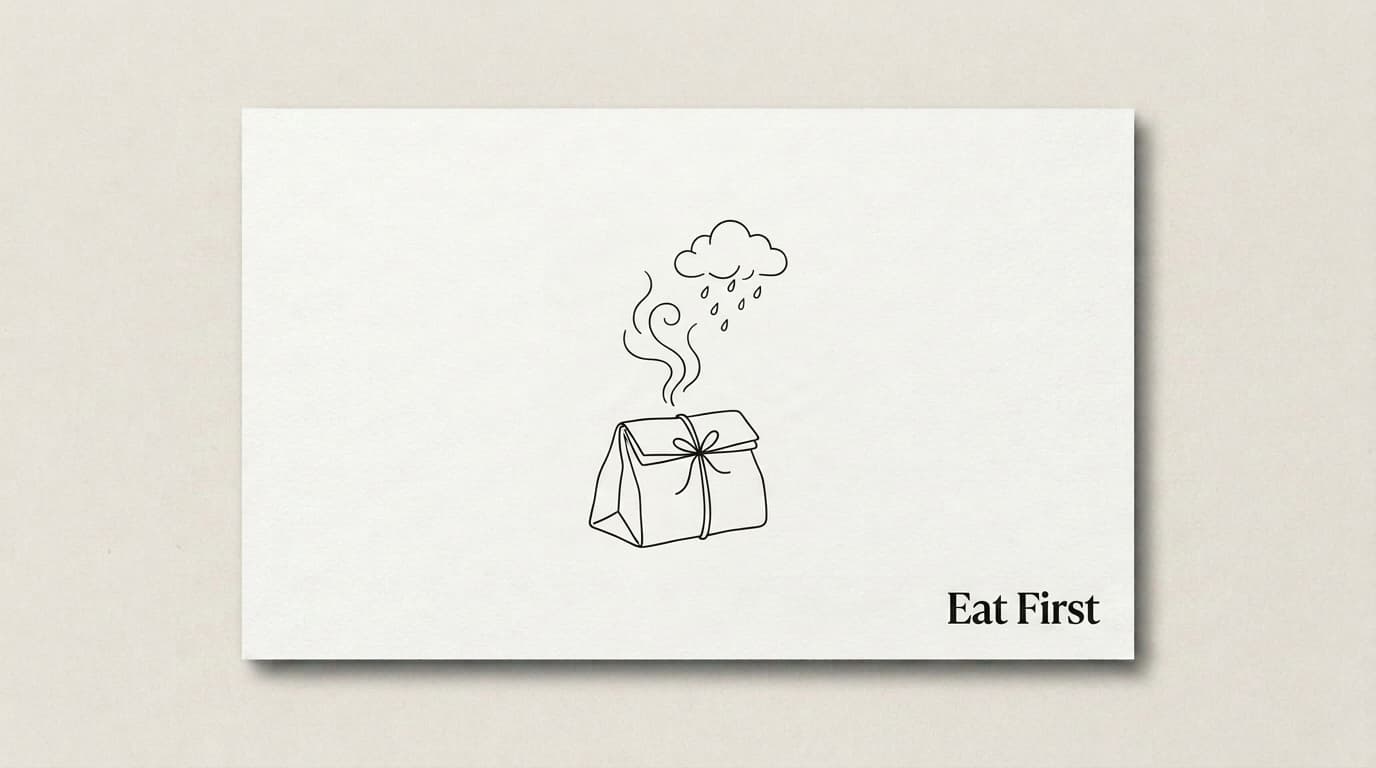
It was late, and he had two packets of dinner from the canteen wrapped in brown paper. He smelled like hot oil, roasted curry powder, and dhal. He looked tired, just an ordinary guy carrying food because it was time to eat.
He dropped down on the sofa next to me, shoved a warm packet into my hands, and looked at me.
"Why do you look like that?" he asked. "What happened?"
My voice cracked. I told him everything, shaking, waiting for him to look at me in disgust or panic.
Instead, he tore open his paper packet, snapped a piece of papadum, and looked straight at me.
"Eat first," he said.
"Are you serious?" I asked. "Did you not hear me? My life is finished."
He shook his head and laughed softly.
"Look around you," he said. "You are sitting on a sofa. Nobody has called your parents. Nobody has kicked you out of anywhere. That guy sent a message because he wants you to sit here and panic. If you fall apart, you are just giving him what he wants and making his plan work. You are sitting here torturing yourself over a story that has not even happened. If a problem actually comes, we will go together and solve it. But right now, you are just hungry and scaring yourself to death. Eat your food."
I opened the paper. The steam came out, smelling like coconut milk and spices. I took one bite of rice.
Right then, the noise stopped.
The apocalypse vanished. The trees outside were still there. The quiet hum of the hallway lights was still there. My friend was right next to me, complaining about his long day. The total destruction of my life had consumed hours of my energy, but it had existed only inside my skull. Outside of it, nothing had fallen apart.
The Alarm and the Hands
Here is the simple truth about how your head works.
Deep inside your brain, there is an ancient alarm system. Its only job is to look out for danger. When it smells trouble, it does not stop to check the facts. It simply slams the emergency button and floods your body with adrenaline and dread.
Way out in front, you have a completely different part of your brain. That is the part that thinks, plans, reasons, and solves problems.
The trouble with overthinkers is that we mix the two up. You cannot stop the alarm system from going off. If a scary message arrives, your alarm will ring. That is pure biology. You cannot control that sudden wave of fear any more than you can stop your heart from beating fast when you run up the stairs.
What you can control is how you respond to it.
The alarm system can shout, but it does not have hands. It cannot make decisions. Only your thinking mind can do that. When panic hits, you do not have to obey the alarm. You can simply look at it and say: I hear you making noise, but I am not going to burn the house down.
Weather Inside Your Head
I once listened to The Diary of a CEO episode with Stephen Fry, and a quote he mentioned stuck with me. He shared an observation about emotional storms: they are exactly like the weather.
If you step outside and it is pouring rain, you do not look at the dark clouds and scream, "The sun is gone forever! Light will never return to the earth!" You do not take the rain personally. You know it is just wet, cold, and uncomfortable. You accept that it is raining. You open an umbrella, or you walk through it and get wet, because you know for a fact that every single storm in human history eventually runs out of water. The weather always moves on.
Overthinking is just weather inside your head.
When your thoughts start spinning, your brain is just raining. It is pouring worries, thunder, and lightning. The biggest mistake you can make is trying to fight the clouds, or complaining about why the sky is gray. That only makes the storm feel louder.
Instead, you just have to watch it. Acknowledge that it is raining. Tell yourself: Right now, my head is throwing a storm. That is fine. It does not mean the world has ended.
Three Rules for the Storm
Whenever you feel that dark cloud gathering, do three things:
- 1. Separate the feeling from the facts. The alarm in your head is feeling terror, but that does not mean terror is the truth. Acknowledge the fear without treating it like reality.
- 2. Pull yourself back into the room. Look at the floor. Feel the fabric of the sofa beneath your legs. Smell the food on your plate. Drink a glass of water. Force your mind to notice what is physically happening right now, instead of the horror movie it is projecting into next year.
- 3. Never sit in the dark alone. When an overthinking brain is trapped by itself, it treats every tiny shadow like a giant. The moment you speak your fear out loud to someone who is grounded, the shadow shrinks. A good friend will not join your panic. They will hand you a plate of dinner, ground you in the present, and remind you of who you are.
You do not need to fix your brain. You are designed to think deeply, and that is not a disease. Just remember that not every alarm is a fire, and not every dark cloud means the sun is gone.
Take a breath, let the weather pass, and eat your dinner. Everything is going to be all right.
~ KH
Enjoyed this article?
Subscribe for new chronicles. No spam — just the good stuff.
Join the WhatsApp Channel
Get updates & new posts straight to your WhatsApp. No spam.
Comments
You Might Also Like
The Darwinian Defense
When someone you care about is overwhelmed by emotional chaos, is it kinder to offer unconditional comfort, or the cold, liberating truth of evolutionary reality?

Pigs can fly
A personal story about identity, conformity, and the fundamental, horizon-breaking truth of the human spirit.